
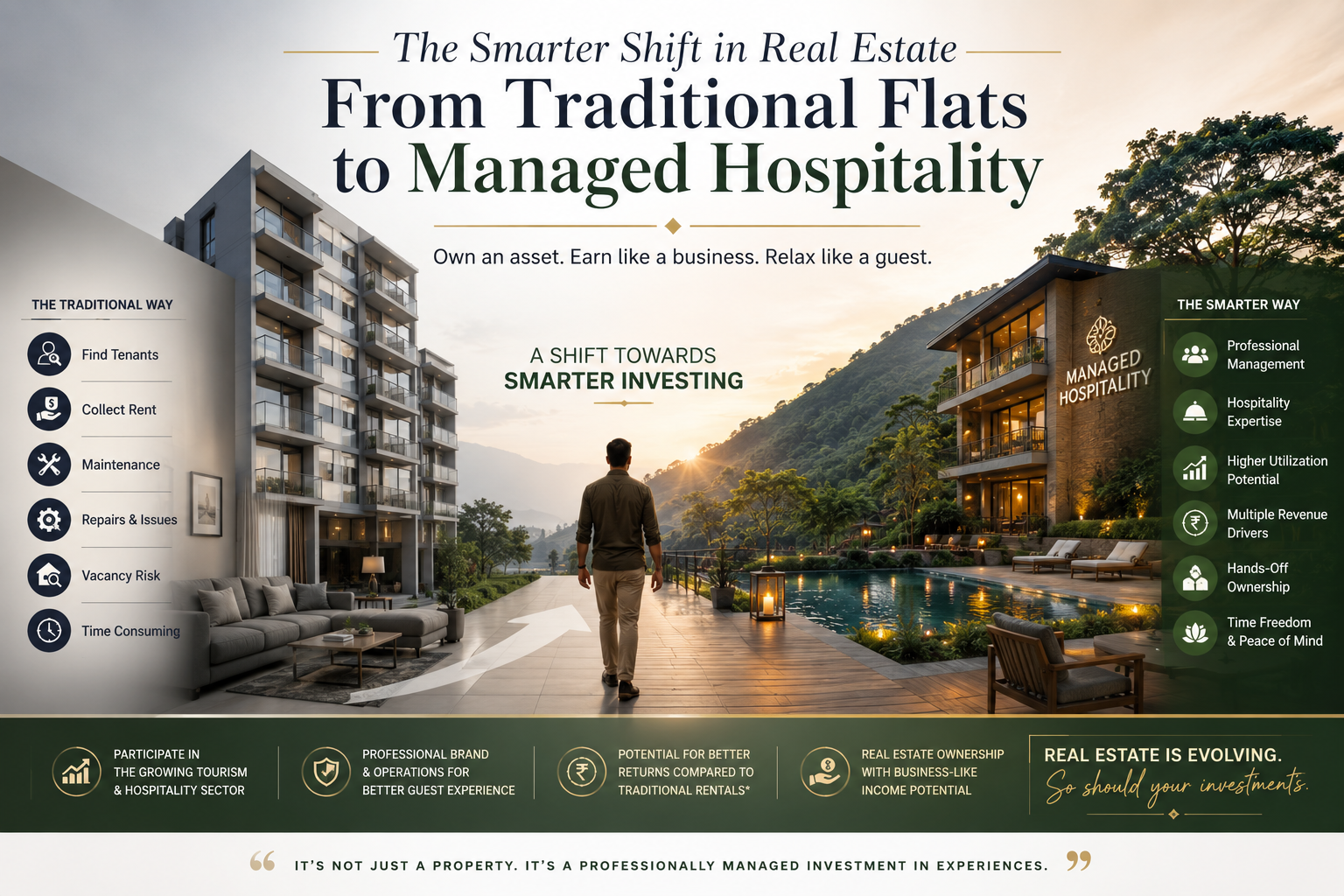
For years, buying a residential flat has been one of the most familiar ways to invest in real estate. The idea is simple: buy a property, rent it out, wait for appreciation, and eventually sell it.
But investor preferences are evolving.
With changing travel habits, the growth of tourism destinations, and increasing demand for professionally operated accommodation, managed hospitality properties are emerging as an alternative real estate investment model.
So, why are some investors looking beyond traditional flats?
1. Moving From “Owning Space” to “Owning an Experience”
A residential flat primarily provides a physical asset. Its investment potential is generally linked to factors such as location, rental demand, and capital appreciation.
A managed hospitality property adds another layer: the business of hospitality.
Instead of simply owning a unit, investors can participate in a property designed around short-stay accommodation, guest experiences, and professional hotel operations.
This makes hospitality real estate particularly interesting in tourism-driven destinations.
2. Professional Management Reduces the Day-to-Day Hassle
One of the biggest challenges of owning a rental flat is managing it.
Finding tenants, handling maintenance, following up on rent, dealing with repairs, and managing vacancies can require regular involvement.
With a managed hospitality property, operations are handled by a professional management team or hospitality operator, depending on the project structure.
For investors looking for a more hands-off ownership experience, this can be an important advantage.
3. Hospitality Can Have Multiple Demand Drivers
Traditional residential rentals primarily depend on people looking for long-term accommodation.
Hospitality properties can cater to a broader audience:
* Tourists
* Families
* Couples
* Corporate groups
* Weekend travellers
* Event and leisure visitors
In established tourism destinations, this can create multiple sources of accommodation demand.
4. Tourism Is Creating New Real Estate Opportunities
Travel is increasingly becoming experience-driven.
People are looking for destinations that offer nature, adventure, wellness, wildlife, food, and unique stays. As tourism infrastructure develops, demand for quality accommodation can also increase.
This is why destinations such as Jim Corbett are attracting attention from both hospitality brands and real estate investors.
A property located in a tourism-driven market can potentially benefit from the broader growth of the destination—not just from the local residential market.
5. Better Utilisation of the Property
A traditional flat may remain occupied by one tenant for a long period, while hospitality properties are designed for short-term stays and frequent guest turnover.
The underlying model is therefore different.
The focus shifts from simply renting a property to operating accommodation efficiently.
However, investors should remember that higher utilisation does not automatically mean higher returns. Occupancy, room rates, operating costs, management fees, seasonality, and the project's revenue-sharing structure all matter.
6. Branding Can Add Value
A branded or professionally managed hospitality property can offer something that an individual residential rental generally cannot: an established hospitality identity.
Branding, standardised guest services, professional operations, marketing, and reservation networks can help create a consistent guest experience.
For investors, the attraction is not just the physical unit but the ecosystem operating around it.
7. A Different Approach to Passive Real Estate Investing
Many investors want real estate exposure without becoming landlords.
Managed hospitality can address this preference by separating ownership from day-to-day operations.
The investor owns the asset, while professional teams manage hospitality operations according to the project's structure.
This can make the model attractive to investors who have capital to deploy but limited time or interest in property management.
8. Traditional Flats Still Have Their Place
The shift towards managed hospitality does not mean residential flats are becoming irrelevant.
Traditional flats can be suitable for investors seeking long-term residential rental demand, personal use, or conventional property ownership.
Managed hospitality simply provides a different investment proposition.
The right choice depends on the investor's objectives, risk appetite, investment horizon, location, expected income model, and liquidity requirements.
9. What Investors Should Check Before Investing
Managed hospitality may sound attractive, but investors should evaluate the project carefully.
Before investing, consider:
* Who is the developer?
* Who is managing the property?
* Is there a recognised hospitality brand?
* What is the revenue-sharing model?
* What management and maintenance charges apply?
* How is occupancy calculated?
* What are the historical or projected operating assumptions?
* What are the exit and resale conditions?
* Is the property legally approved and properly documented?
Projected returns should never be treated as guaranteed returns.
The Bigger Picture
The real estate market is moving beyond the simple idea of “buy a flat and collect rent.”
Today, investors have access to different formats—including managed hotels, serviced apartments, holiday homes, branded residences, and hospitality studios.
For investors seeking a combination of real estate ownership + professional management + exposure to tourism, managed hospitality can offer an interesting alternative to conventional residential investment.
Conclusion
Traditional flats remain a familiar and established investment option. But as investor expectations change, managed hospitality is creating a new category within real estate.
The appeal lies in combining an underlying property asset with professional hospitality operations and tourism-driven demand.
The question is no longer only, “What property should I buy?”
It is also, “What kind of property model fits my investment goals?”
For years, buying a residential flat has been one of the most familiar ways to invest in real estate. The idea is simple: buy a property, rent it out, wait for appreciation, and eventually sell it.
But investor preferences are evolving.
With changing travel habits, the growth of tourism destinations, and increasing demand for professionally operated accommodation, managed hospitality properties are emerging as an alternative real estate investment model.
So, why are some investors looking beyond traditional flats?
1. Moving From “Owning Space” to “Owning an Experience”
A residential flat primarily provides a physical asset. Its investment potential is generally linked to factors such as location, rental demand, and capital appreciation.
A managed hospitality property adds another layer: the business of hospitality.
Instead of simply owning a unit, investors can participate in a property designed around short-stay accommodation, guest experiences, and professional hotel operations.
This makes hospitality real estate particularly interesting in tourism-driven destinations.
2. Professional Management Reduces the Day-to-Day Hassle
One of the biggest challenges of owning a rental flat is managing it.
Finding tenants, handling maintenance, following up on rent, dealing with repairs, and managing vacancies can require regular involvement.
With a managed hospitality property, operations are handled by a professional management team or hospitality operator, depending on the project structure.
For investors looking for a more hands-off ownership experience, this can be an important advantage.
3. Hospitality Can Have Multiple Demand Drivers
Traditional residential rentals primarily depend on people looking for long-term accommodation.
Hospitality properties can cater to a broader audience:
* Tourists
* Families
* Couples
* Corporate groups
* Weekend travellers
* Event and leisure visitors
In established tourism destinations, this can create multiple sources of accommodation demand.
4. Tourism Is Creating New Real Estate Opportunities
Travel is increasingly becoming experience-driven.
People are looking for destinations that offer nature, adventure, wellness, wildlife, food, and unique stays. As tourism infrastructure develops, demand for quality accommodation can also increase.
This is why destinations such as Jim Corbett are attracting attention from both hospitality brands and real estate investors.
A property located in a tourism-driven market can potentially benefit from the broader growth of the destination—not just from the local residential market.
5. Better Utilisation of the Property
A traditional flat may remain occupied by one tenant for a long period, while hospitality properties are designed for short-term stays and frequent guest turnover.
The underlying model is therefore different.
The focus shifts from simply renting a property to operating accommodation efficiently.
However, investors should remember that higher utilisation does not automatically mean higher returns. Occupancy, room rates, operating costs, management fees, seasonality, and the project's revenue-sharing structure all matter.
6. Branding Can Add Value
A branded or professionally managed hospitality property can offer something that an individual residential rental generally cannot: an established hospitality identity.
Branding, standardised guest services, professional operations, marketing, and reservation networks can help create a consistent guest experience.
For investors, the attraction is not just the physical unit but the ecosystem operating around it.
7. A Different Approach to Passive Real Estate Investing
Many investors want real estate exposure without becoming landlords.
Managed hospitality can address this preference by separating ownership from day-to-day operations.
The investor owns the asset, while professional teams manage hospitality operations according to the project's structure.
This can make the model attractive to investors who have capital to deploy but limited time or interest in property management.
8. Traditional Flats Still Have Their Place
The shift towards managed hospitality does not mean residential flats are becoming irrelevant.
Traditional flats can be suitable for investors seeking long-term residential rental demand, personal use, or conventional property ownership.
Managed hospitality simply provides a different investment proposition.
The right choice depends on the investor's objectives, risk appetite, investment horizon, location, expected income model, and liquidity requirements.
9. What Investors Should Check Before Investing
Managed hospitality may sound attractive, but investors should evaluate the project carefully.
Before investing, consider:
* Who is the developer?
* Who is managing the property?
* Is there a recognised hospitality brand?
* What is the revenue-sharing model?
* What management and maintenance charges apply?
* How is occupancy calculated?
* What are the historical or projected operating assumptions?
* What are the exit and resale conditions?
* Is the property legally approved and properly documented?
Projected returns should never be treated as guaranteed returns.
The Bigger Picture
The real estate market is moving beyond the simple idea of “buy a flat and collect rent.”
Today, investors have access to different formats—including managed hotels, serviced apartments, holiday homes, branded residences, and hospitality studios.
For investors seeking a combination of real estate ownership + professional management + exposure to tourism, managed hospitality can offer an interesting alternative to conventional residential investment.
Conclusion
Traditional flats remain a familiar and established investment option. But as investor expectations change, managed hospitality is creating a new category within real estate.
The appeal lies in combining an underlying property asset with professional hospitality operations and tourism-driven demand.
The question is no longer only, “What property should I buy?”
It is also, “What kind of property model fits my investment goals?”