
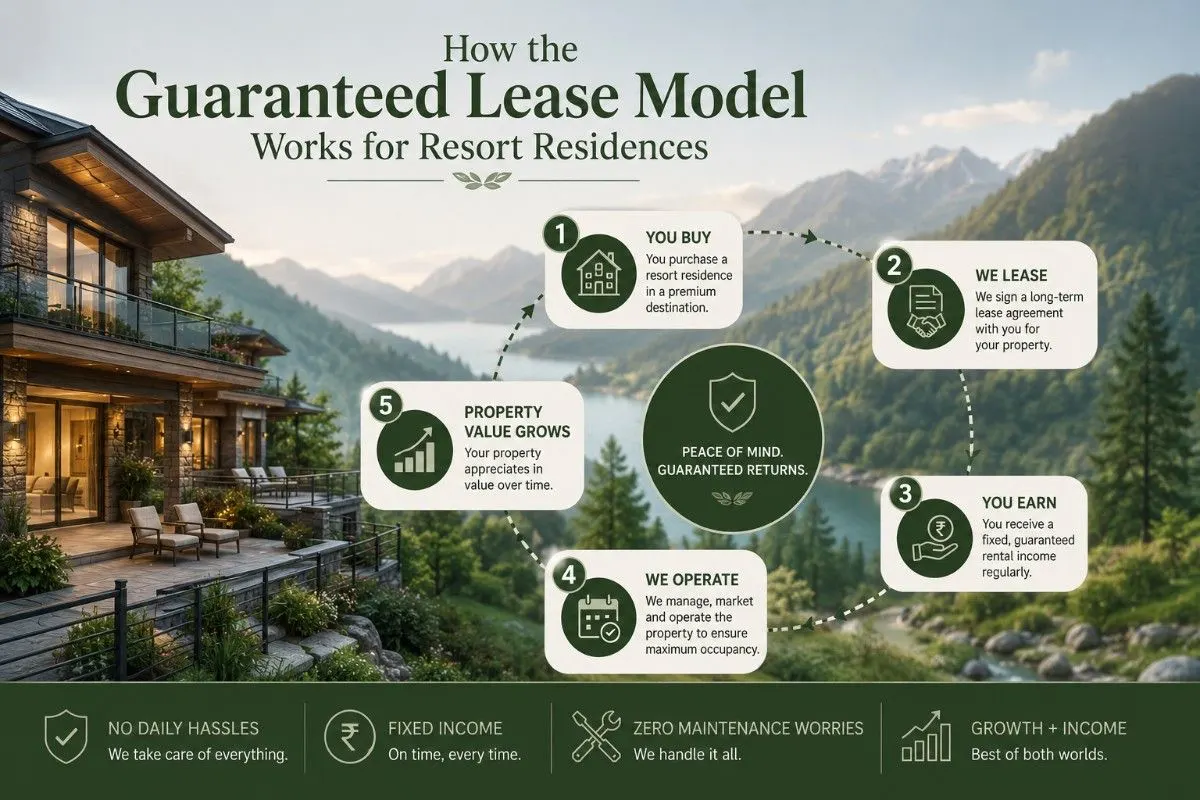
Resort residences are increasingly sold under an operating structure known as a lease model. It is worth understanding precisely what it does and does not mean.
The structure in four parts. First, you purchase and hold clear title to a specific unit within the resort. Second, you and the operating company execute a Lease Deed, under which the operator takes the unit on lease for a defined tenure. Third, the operator runs the resort — front desk, housekeeping, food and beverage, distribution, marketing and maintenance are all handled by them. Fourth, the operator pays you a lease rental at the frequency set out in the deed.
What "fixed" actually means. The lease rental is contractual, not performance-linked. Whether the unit is occupied for three hundred nights or thirty, the amount payable under the deed does not change. That is the essential difference between a lease structure and a revenue-share structure, where the owner receives a percentage of what the unit actually earns.
What to read before signing. Tenure and lock-in period. Escalation clause and the interval at which it applies. Payment frequency and the remedy if a payment is delayed. Who bears the cost of refurbishment, statutory dues and insurance. Renewal terms at the end of the tenure, and the exit route if you wish to sell the unit mid-tenure.
A lease structure is a commercial contract between two parties, and its value to you rests entirely on what that contract says. Read it in full, and take independent legal advice before you commit.
The structure in four parts. First, you purchase and hold clear title to a specific unit within the resort. Second, you and the operating company execute a Lease Deed, under which the operator takes the unit on lease for a defined tenure. Third, the operator runs the resort — front desk, housekeeping, food and beverage, distribution, marketing and maintenance are all handled by them. Fourth, the operator pays you a lease rental at the frequency set out in the deed.
What "fixed" actually means. The lease rental is contractual, not performance-linked. Whether the unit is occupied for three hundred nights or thirty, the amount payable under the deed does not change. That is the essential difference between a lease structure and a revenue-share structure, where the owner receives a percentage of what the unit actually earns.
What to read before signing. Tenure and lock-in period. Escalation clause and the interval at which it applies. Payment frequency and the remedy if a payment is delayed. Who bears the cost of refurbishment, statutory dues and insurance. Renewal terms at the end of the tenure, and the exit route if you wish to sell the unit mid-tenure.
A lease structure is a commercial contract between two parties, and its value to you rests entirely on what that contract says. Read it in full, and take independent legal advice before you commit.